Engine oil leaks are a common concern for drivers, especially in older vehicles or engines with worn seals. Effective leak-stopping products can reduce oil loss, minimize blue smoke, and help protect engine performance between professional repairs. The following selections focus on trusted seal-restoring formulas, leak sealants, and high-mileage solutions designed to renew seals, stop leaks, and support engine longevity. This guide reviews five relevant options, compares their mechanisms, and provides considerations to help you choose the right product for your vehicle and driving needs.
| Product | Brand | Key Benefit |
|---|---|---|
| Lucas Oil 10278 Engine Oil Stop Leak – 1 Quart | Lucas Oil | Seal renewal and oil-pressure support |
| Bar’s Leaks OS-1 Oil Seal Engine Oil Burning and Leak Repair | Bar’s Leaks | Seal and gasket sealing across multiple engine types |
| XADO ATOMEX Oil Additive Stop Leak | XADO | Elasticity restoration for seals and gaskets |
| Bar’s Leaks 1000 High Mileage Engine Repair | Bar’s Leaks | Performance restoration, compression, and leak stopping |
| BlueDevil Oil Stop Leak | BlueDevil | Permanent seal and broad engine compatibility |
Lucas Oil 10278 Engine Oil Stop Leak

Lucas Oil 10278 is marketed as a premium seal renewal additive designed to work with petroleum, semi-synthetic, and full synthetic oils. The formula targets worn seals to renew elasticity without risking corrosion or damage to engine components. It claims to reduce engine noise and oil consumption while helping to raise oil pressure, which can improve overall engine efficiency. This product is positioned for engines experiencing minor oil seepage due to aging seals, rather than dramatic leaks from damaged components. Users should verify compatibility with their oil type and follow dosage instructions for best results.
Bar’s Leaks OS-1 Oil Seal Engine Oil Burning and Leak Repair

Bar’s Leaks OS-1 is designed to address leaking main seals and gaskets in a wide range of gasoline and diesel engines, including turbocharged and hybrid setups. The formula is claimed to renew worn valve seals and guides, and to help stop oil burning and blue exhaust smoke. It’s marketed for engines of various cylinder counts and vehicle types, with dosage recommendations for different usage scenarios, including heavy-duty applications. This option is positioned as a versatile, multi-engine solution aimed at reducing both leaks and oil consumption.
XADO ATOMEX Oil Additive Stop Leak

XADO ATOMEX is marketed as an elasticity restorer that revives rubber gaskets and seals to stop leaks. The product targets both automotive and motorcycle engines, offering a slick liquid formula intended to seal leaks and rejuvenate seals for extended protection. It’s framed as a cost saver for older and newer engines alike, combining leak stopping with enhanced engine protection. As with similar additives, it’s important to check compatibility with your oil type and engine model before use.
Bar’s Leaks 1000 High Mileage Engine Repair
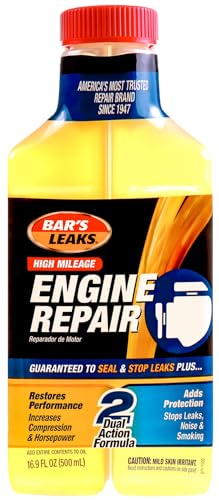
Bar’s Leaks 1000 High Mileage Engine Repair targets performance restoration for engines with high mileage. Its formulation is designed to increase compression and horsepower while stopping leaks and reducing oil consumption. The product emphasizes reducing noise and smoking associated with worn seals and cylinders, aiming to deliver lasting improvements for engines that have accumulated wear over time. It’s positioned as a multi-purpose solution for high-mileage vehicles facing common oil-related issues.
BlueDevil Oil Stop Leak

BlueDevil Oil Stop Leak is marketed as a permanent seal solution compatible with all gasoline and diesel engines. The product emphasizes ease of use—simply pour into the oil slump or crankcase—and claims to form a lasting seal that remains effective after miles of driving. It is designed to work across a wide range of engine configurations, offering a straightforward approach for drivers seeking a long-term fix for seepage and minor leaks without dismantling components.
Buying Guide
When choosing an engine oil stop-leak product, consider the following:
- Leak type and location: Seepage from valve covers, oil pans, or seals may respond differently. Some formulations are better for sealing gaskets and worn seals, while others target oil-burning issues.
- Oil compatibility: Verify compatibility with petroleum, synthetic, semi-synthetic oils, and your vehicle’s specifications. Using an incompatible additive can affect lubrication and engine performance.
- Engine condition and mileage: High-mileage engines often benefit from elasticity-restoring compounds and seal conditioners, whereas severely damaged seals may require mechanical repair.
- Application scope: Some products are universal across gasoline and diesel engines; others cater to specific engine types or turbocharged configurations. Choose according to your vehicle’s setup.
- Expected outcomes: Expect reduced oil consumption, less seepage, improved compression, or decreased smoke. Low-leak incidents may respond better than large leaks.
- Maintenance plan: Additives are not a substitute for repairs. If leaks persist or worsen, consult a mechanic for evaluation of gaskets, seals, or oil pan integrity.
- Manufacturer guidance: Follow dosage instructions and intervals exactly. Some products require multiple treatments or a specific driving cycle for optimum sealing.
Choosing the right stop-leak product involves balancing engine type, leak severity, and maintenance goals. For some drivers, a single-use application may suffice; for others, a combination of a seal-restoring additive and mechanical inspection will yield best results. Always run a quick check after use to ensure there are no new leaks and that oil levels remain stable. If in doubt, seek professional evaluation to prevent potential engine damage.