The 5.3-liter Vortec Silverado is known for dependable power, but enthusiasts seek enhanced performance. This guide highlights five high-potential options that align with the 5.3’s architecture and turbocharging goals. Each selection includes key components, compatibility notes, and installation considerations to help buyers compare practical choices for street use and hobbyist builds alike.
| Product | Brand | Key Feature |
|---|---|---|
| A-Premium Complete Turbo Kit | A-Premium | Wastegate actuator & gasket included; LB7 engine code |
| Turbo Exhaust Manifolds For 5.3 | Generic | Manifolds and crossover for single turbo setup |
| MMI LS Turbo Exhaust Kit | MMI | NO NEED TO RELOCATE ALTERNATOR; Vortec V8 compatibility |
| 2.5″ Turbo Manifold Flange | Generic | OE part number 0023256; 1999-2013 Silverado/Avalanche |
| MOOSUN Cold Air Intake Kit | MOOSUN | Intake tube & heat shield with powder coating |
A-Premium Turbo Kit With Wastegate Actuator
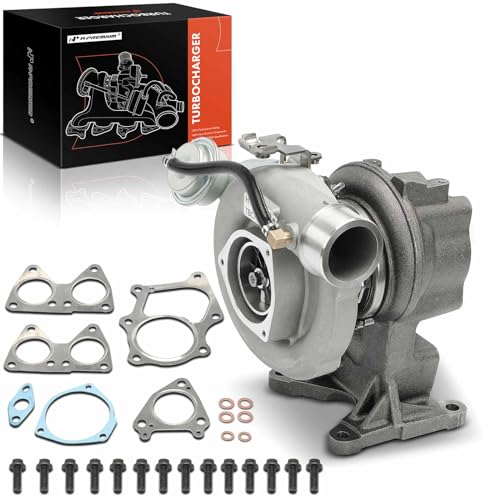
The A-Premium kit is designed for Chevy Silverado 2500 HD and Silverado 3500 as well as GMC Sierra 2500 HD and Sierra 3500, spanning model years 2001–2004 with the 6.6L family. It specifies the RHG6 turbo model and includes a wastegate actuator and gasket, helping streamline install and boost control. Exhaust manifold inclusion is listed as not included, ensuring compatibility with customers who already have manifold options. The kit leverages alloy construction and targets LB7 engine code applications, offering a pathways for a bolt-on boost upgrade when paired with appropriate tuning and fuel management.
Key considerations include installation complexity, ensuring proper engine management calibration, and confirming that emissions requirements are met in your region. The kit’s components are chosen to enable reliable boost response, but professional installation and a suitable tune are recommended to maximize performance and avoid unintended engine strain. This selection serves as a solid base for a higher-boost configuration when combined with compatible exhaust and intercooling components.
Turbo Exhaust Manifolds For 5.3 Vortec

This 3-piece set targets 5.3 and 4.8 Vortec engines, offering manifolds and a crossover suitable for a single-turbo setup. The configuration is intended to maximize exhaust flow while maintaining compatibility with stock or upgraded turbo hardware. For a 5.3 Silverado, these manifolds provide a foundation for an efficient turbo installation, enabling improved spool characteristics and higher intake pressure delivery when paired with a compatible turbocharger and exhaust system.
Potential limitations include the need for a matching turbo kit and appropriate tuning. As manifolds are a structural component, compatibility with your chosen turbo flange, wastegate, and exhaust routing should be verified before purchase. Installers should assess the fitment with stock chassis clearances and any aftermarket piping, ensuring no interference with steering or accessory belts. Proper gaskets and fasteners are essential to prevent leaks at boost levels.
MMI LS Turbo Exhaust Hotparts T4 Kit
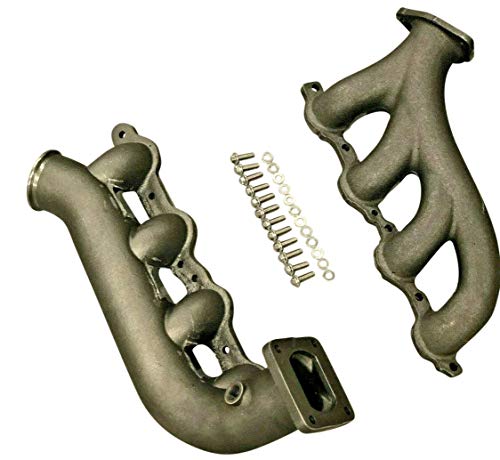
The MMI kit emphasizes LS-based turbo exhaust components for Vortec-powered trucks, covering 4.8, 5.3, and 6.0 LSX configurations. A notable selling point is the stated ease of installation without relocating the alternator, which can simplify the fit in some engine bays compared with other kits. The package targets model years in the late 1990s onward and aligns with a broad range of GM V8s, making it a flexible option for those pursuing a turbocharged application with a focus on a straightforward setup and dependable exhaust routing.
Buyers should consider the overall system compatibility with their chosen turbocharger, intercooler (if included in the build), and fuel/tuning setup. While no kit can guarantee instant power gains without a matching Tune, this option provides a robust platform for enthusiasts wanting a cleaner exhaust path and a reliable mounting arrangement when upgrading a 5.3 Silverado’s intake and boost strategy.
2.5″ Turbo Manifold Flange For GM LS

This flange is presented as an OE-part-numbered option (0023256) intended for Silverado 1999–2013 and related models such as Avalanche. It serves as a compatible interface for turbo header assemblies on 4.8, 5.3, 5.7, 6.0, and similar GM LS-based engines, enabling precise mounting of turbo headers or manifolds with a 2.5-inch connection. The listing indicates broad applicability for mid-1990s to early-2010s GM trucks, providing a reliable link point for turbo installations that require a standardized inlet size and robust metal construction.
When considering this flange, verify the turbocharger’s flange pattern and bolt pattern alignment to avoid misfit. Practical installation requires attention to bolt torque, gasket selection, and potential need for additional adapters. This component is most useful as part of a complete turbo upgrade, rather than as a stand-alone modification, and is best paired with appropriate exhaust piping and a calibrated engine management approach.
MOOSUN 4-Inch Cold Air Intake Kit
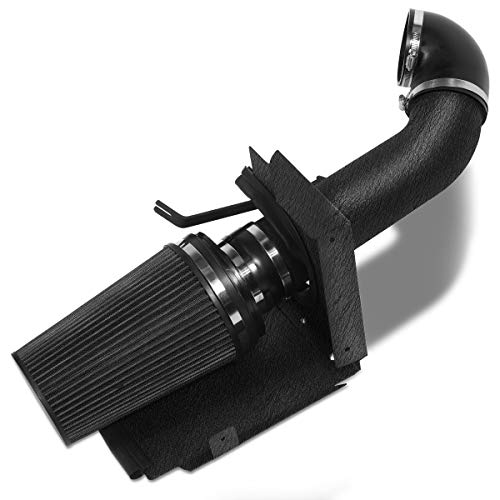
The MOOSUN cold air intake kit is designed for 1999-2006 GM trucks with 4.8L, 5.3L, and 6.0L displacements, including Silverado lines. It features an intake tube and a steel heat shield with a carbon-black powder coating for durability and a clean look under the hood. The product notes caution about international versions and possible differences in labeling or instructions, but the core benefit remains a freer breathing intake path that can complement turbocharged setups by reducing air intake resistance and potentially supporting higher boost readiness.
Practical considerations include ensuring compatibility with your overall turbo system, air-fuel tuning needs, and filter choices. A larger intake can improve throttle response and peak air delivery, but gains depend on the entire forced-indit flow sequence, including turbo sizing, intercooling, exhaust flow, and engine management. This kit is best viewed as a performance upgrade alongside a complete turbo plan rather than a standalone boost solution.
Buying Guide
Performance goals and system type
Decide whether you want a bolt-on boost with minimal engine modification or a larger, more ambitious turbo system. A turbo kit with wastegate control and compatible exhaust components is ideal for predictable performance gains, while manifolds and flanges enable customized turbo routing for unique builds. Align your choice with desired horsepower range, daily drivability, and cooling considerations such as intercooling and heat management.
Compatibility and engine specifics
Verify engine code, generation, and model year compatibility. The 5.3 Silverado family spans multiple generations and configurations, so confirm engine type (Vortec/LT/VVT), booster placement, and any required tuning. Some kits specify LB7 or RHG6 models, while others focus on LS-based manifolds. Always cross-check with your vehicle’s intake, exhaust routing, and accessory clearance to avoid fitment issues.
Emission rules and tuning
Turbo upgrades can affect emissions compliance and required tuning. Some regions require certified components or specific inspection regimes. Plan for an appropriate engine management tune to optimize air-fuel ratio under boost, prevent detonation, and maintain safe EGTs. A reputable tuner or shop experience with GM turbo setups can reduce the risk of drivability problems or failure after installation.
Installation considerations
Installation difficulty varies. Complete turbo kits with integrated wastegates and gaskets may simplify assembly, while manifolds and flanges require precise alignment and may necessitate custom piping. Consider the need for fuel system upgrades, intercooler installation, exhaust piping, and mount points. Access to proper torque specs, gaskets, and quality hardware is essential to prevent boost leaks and ensure long-term reliability.
Budget, warranties, and long-term reliability
Budgeting for a turbo project includes parts, tuning, and potential engine health upgrades. Look for components with documented performance and warranty coverage where available. Consider the trade-off between a complete, integrated kit and separate parts that allow incremental upgrades. Longevity depends on installation quality, the suitability of parts for your engine, and ongoing maintenance practices such as regular inspection of lines, clamps, and seals.