Choosing the right RV power converter is essential for dependable off-grid and campsite power. The following top-rated models balance charging speed, safety, and versatility, helping you maintain lights, fans, and appliances without battery drain or noise. This guide highlights five 55 to 65 amp converters suitable for most mid-sized RVs, boats, and campers, emphasizing smart charging, voltage flexibility, and built-in protections.
| Product | Brand | Amp | Output Range | Notable Feature |
|---|---|---|---|---|
| PowerMax PM3-55 RV Power Converter | PowerMax | 55 | 13.6VDC – 14.4VDC | Quiet operation with UL/CUL safety |
| 2025 Upgrade WF-9855 55 Amp RV Converter | Xmnbl | 55 | 13.6VDC | 5-year warranty and solid support |
| PowerMax PM4 55 Amp RV Converter | PowerMax | 55 | 13V – 16.5V | 4-stage smart charging |
| RecPro RV Converter 55 Amp | RecPro | 55 | 13V – 16.5V | 4-stage smart charging |
| WF-9865 65 Amp RV Power Converter | sdanbom | 65 | 13.6VDC – 16.5VDC | Deck-mount, automatic 3-stage charging |
PowerMax PM3-55 RV Power Converter
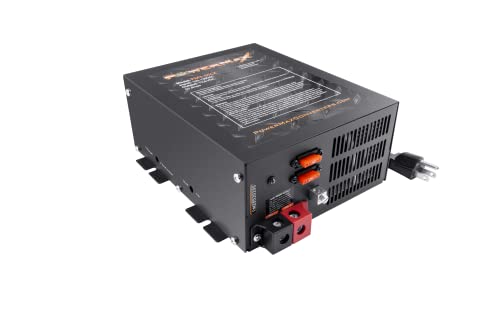
PowerMax PM3-55 delivers 55 amperes of regulated DC power from standard 110V shore power. The unit emphasizes quiet operation through a temperature-controlled cooling system and an LED status indicator for easy monitoring. A wide voltage range, from 13.6V to 14.4V, supports diverse RV electrical configurations, ensuring reliable charging for lights, fans, and essential appliances even in varying conditions.
The PM3-55 is built with safety in mind, carrying UL and CUL certifications to meet stringent standards for mobile use. This makes it a solid choice for RVers who prioritize reliability without noise or overheating. Installation is straightforward in compact spaces, making it suitable for cabinets or compact panels in many RV layouts.
Overall, PM3-55 offers calm, dependable power delivery with essential protections, making it a practical centerpiece for mid-sized RV power systems that rely on shore power when available and safe 12V charging when not.
Upgrade WF-9855 55 Amp RV Converter

The WF-9855 55A RV power converter provides 13.6VDC output from a 105-130VAC input, delivering up to 950 watts of converted power. It’s designed as a compatible replacement for the WF-9800 series and benefits from responsive after-sales support, including a five-year warranty that extends beyond the typical Amazon return window. This makes it a durable choice for RV owners upgrading older units or equipping a fresh RV installation.
With broad compatibility for RV electrical systems, the WF-9855 supports varied battery chemistries when paired appropriately, helping maintain battery health and readiness as you travel. Its robust construction and warranty provide reassurance for frequent travelers who depend on steady shore-power charging for lighting, refrigeration accessories, and small electronics.
Mounting and setup are straightforward, and the model emphasizes reliable charging with built-in protections to help prevent battery drain or overcharge, contributing to long-term battery life for RV adventures.
PowerMax PM4 55 Amp RV Converter

PowerMax PM4 55A RV converter combines a built-in four-stage smart battery charger with flexible output control. Its voltage range spans from 13V to 16.5V, making it compatible with a wide array of battery chemistries, including lithium, AGM, gel, and lead-acid. This versatility helps optimize charging profiles for different battery banks and operational needs in RV, boat, or off-grid setups.
The PM4’s four-stage charging enhances battery longevity by strategically managing bulk, absorption, float, and an equalization phase. This careful management reduces the risk of overcharging and maintains battery health in extended camping trips, while ensuring consistent power delivery for essential RV systems and recreational electronics.
Designed for reliability, PM4 remains a strong choice for users needing higher flexibility in voltage and battery compatibility without sacrificing safety or efficiency during long trips.
RecPro 55 Amp RV Converter

RecPro’s 55 Amp RV converter converts 120VAC shore power into usable 12VDC, enabling both battery charging and the operation of low-voltage lights and appliances. It supports a wide operating range from 13V to 16.5V, accommodating various battery chemistries and ensuring reliable power delivery for RV day-to-day needs during camping or travel.
Equipped with a 4-stage smart charging system, this unit helps maintain battery health by optimizing charging stages and preventing overcharging. RecPro units are commonly chosen for their balanced performance, ease of installation, and dependable support for RV electrical systems across a range of capacities.
For RV owners seeking a straightforward, reliable converter with solid charging profiles, RecPro 55A provides a practical, well-supported option for mid-sized power setups.
WF-9865 65 Amp RV Power Converter

The WF-9865 65 Amp RV power converter delivers robust DC power for larger battery banks, with three-stage charging designed to balance speed and battery health. Deck-mountable and compact for RV installations, it provides reliable 12V charging while managing heat and overload protection through automatic current limiting.
With 65 amps of charging capacity, the WF-9865 is well-suited for RVs that draw significant power from the battery bank, including lighting, fans, water pumps, and multimedia accessories. Its charging profile aims to protect both batteries and connected devices, making it a strong option for enthusiasts who require higher output in their on-board power system.
Buying Guide
Key purchase considerations help RV owners choose a converter that matches their power needs and battery setup. Start by estimating total 12V draw and add a margin for future expansion to ensure the unit won’t be at its limit during peak use.
- Power needs and headroom: Calculate the continuous amperage your RV electronics require and pick a converter with at least 20–30% extra capacity for peak loads and future additions.
- Battery compatibility: Determine whether your system uses lead-acid, AGM, gel, or lithium batteries. Select a model with a compatible charging profile and voltage range for your chemistry.
- Charging stages: Three-stage vs four-stage charging affects battery longevity and efficiency. Four-stage chargers (bulk, absorption, float, equalization) are generally gentler on batteries over time.
- Voltage regulation: Look for converters that provide a stable 13.6V–14.4V range for standard lead-acid systems, and higher or adjustable output (13V–16.5V) for lithium-compatible configurations.
- Safety certifications: UL/CUL listings indicate conformance to safety standards, important for installations in mobile settings with varying conditions.
- Noise and heat management: Temperature-controlled fans and heat sinks minimize noise and overheating, preserving comfort in late-night situations and protecting components.
- Installation considerations: Deck-mount, cabinet-mounted, or integrated installations each have space, weight, and ventilation requirements. Verify compatibility with your RV’s electrical panel layout.
- Durability and warranty: A longer warranty reflects confidence in long-term reliability, which is valuable for off-grid travel and frequent campground use.
- Future-proofing: If you plan to expand with solar, lithium storage, or larger battery banks, choose a converter with adjustable output and strong compatibility with your evolving system.
When evaluating options, compare models that balance high output with efficient charging, robust protection features, and practical installation options. The five converters highlighted above cover a range of power needs, battery chemistries, and installation scenarios, helping you identify the best fit for your RV lifestyle without sacrificing safety or reliability.