The right roof rack can expand your vehicle’s cargo capacity without sacrificing safety or style. If your car has roof rails, you have a wide range of cross bars and roof racks designed to fit raised, flush, or combination rail systems. This guide highlights five top options, explains how to choose the best fit for your car, and provides practical buying insights to help you compare features, load capacity, and installation ease.
Product Overview
| Product | Brand | Key Fit | Load Capacity |
|---|---|---|---|
| Flynsu Universal 48″ Cross Bars | Flynsu | Bare/smooth roof, under 48″ wide | 165 lb |
| Amazon Basics Cross Rail Roof Rack 52″ | Amazon Basics | Raised side rails, gap and rail width specs apply | 165 lb |
| FelicValo 53″ All-Metal Cross Bars | FelicValo | Raised side rails, max span up to 53″ | 260 lb |
| SNIXWOO Enhanced Roof Racks | SNIXWOO | Specific fit for Mazda CX-5 and similar rails | 220 lb |
| YZONA Heavy Duty Universal Cross Bars | YZONA | Flush and raised rails, adjustable | 300 lb |
When selecting a roof rack for rails, consider compatibility with your vehicle’s rail type, the overall width of the cross bars, weight capacity, ease of installation, and how well the system secures items like luggage, bikes, kayaks, or equipment racks. The products below represent common configurations for cars with rails and are chosen for versatility, durability, and user-friendly setup.
Flynsu Universal 48″ Cross Bars Review

The Flynsu cross bars are designed for bare or smooth roofs with a width under 48 inches. Made from premium aluminum alloy, these bars offer a balance of lightness and strength, supporting up to 165 pounds. The kit includes three clamp types to accommodate different mounting scenarios, increasing compatibility with a variety of vehicles that lack integrated roof rails. Some users appreciate the simple installation process and straightforward adjustment, which helps minimize wind interference while traveling. Fit is intended for bare roofs, so verify whether your vehicle’s roof requires additional mounting hardware.
Key features include a robust 165-pound loading capacity and a universal fit meant for vehicles without raised rails. The 48-inch length provides ample coverage for common travel cargo like suitcases, hiking gear, and small equipment. As with any roof rack, evenly distribute weight and observe manufacturer guidelines for maximum load on both cross bars and the roof. This option is particularly useful for travelers who want a versatile, bare-roof solution without built-in rails.
Amazon Basics Cross Rail Roof Rack 52″ (Raised Rails)

This set is tailored for vehicles with raised side rails, offering a 52-inch cross rail length suitable for a broad range of cargo. It emphasizes compatibility with rails that have a significant gap and requires attention to the car’s specific dimensions. The product description notes key fit criteria including rail gap, rail width, and the maximum allowable distance between rails. A design focus on reduced wind noise is highlighted by rubber sealing strips, contributing to quieter highway driving. The kit is robustly constructed from aluminum alloy, delivering corrosion resistance and a substantial load capacity suitable for luggage, equipment, and outdoor gear.
Pros for this option include clear installation guidelines and emphasis on fit verification before purchasing. The cross bars are designed to handle heavier loads while maintaining stable performance across varying speeds and road conditions. Users should confirm their vehicle’s rail dimensions—especially spacing and diameter—to ensure a secure fit and optimal aerodynamics during travel.
FelicValo 53” All-Metal Roof Rack Cross Bars

The FelicValo cross bars are described as all-metal and designed for raised side rails, with a maximum fit gap of 53 inches. The construction uses premium aluminum for high strength and reliability, supporting up to 260 pounds—one of the higher capacities among common aftermarket roof racks. The system prioritizes a minimal wind-noise profile, which can improve comfort on longer drives. It’s presented as a sleek, lock-free design that delivers both aesthetics and performance, with customer support offered for fit questions.
Ideal for weekend travelers who need to haul heavier loads, such as bikes, kayaks, or cargo carriers, this option emphasizes a secure, stable mounting experience. Because it’s intended for raised rails, verify rail height, spacing, and whether the rails have grooves or other profiles that could affect mounting. The higher load rating is a standout feature for those carrying bulky equipment on a regular basis.
SNIXWOO Enhanced Roof Racks for Specific Fits

SNIXWOO offers an elevated cross-bar system designed with Mazda CX-5 compatibility in mind but adaptable to similar rail configurations. The all-aluminum construction promotes light weight while maintaining substantial strength for demanding loads. The kit specifies a 220-pound capacity and emphasizes easy installation, along with rubber-endcaps to protect the vehicle’s roof. It’s described as an upgrade from OE-style rails, appealing to buyers seeking a durable, corrosion-resistant solution that can handle cargo baskets, roof boxes, or sporting equipment.
Considerations for this option include ensuring precise fit to your vehicle’s rails and confirming the absence of interference with door frames or weather seals. The end supports are designed to resist deformation and corrosion, contributing to longer service life. For users who value a robust, all-metal solution with clear fit guidance, SNIXWOO presents a strong option in the mid-range capacity category.
YZONA Heavy Duty Universal Cross Bars
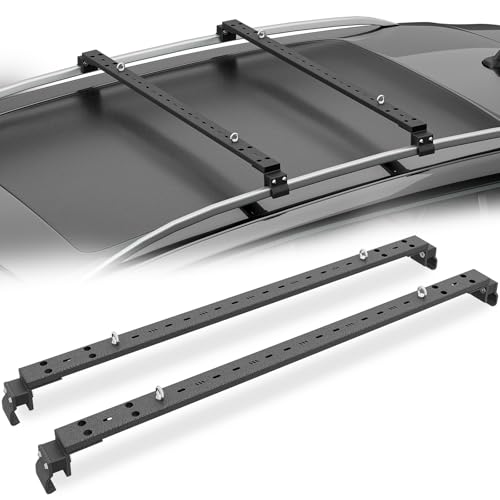
YZONA presents heavy-duty cross bars designed for universal compatibility with both flush and raised side rails. The bars are adjustable, allowing a customizable span up to 47 inches to fit different cargo configurations. The product highlights emphasize versatility for items such as cargo baskets and kayak racks, while also noting a cautious approach to wind resistance with long items. A practical note is provided to avoid transporting excessively long loads without professional racks, underscoring safety considerations for wind drag on taller items.
Key considerations include confirming your car’s rail type and the achievable bar span, ensuring a secure mounting method for your intended loads, and evaluating the overall aerodynamics for your typical driving patterns. The adjustable feature adds flexibility for various gear, making this a good option for owners who frequently swap cargo setups or travel with diverse equipment.
Buying Guide: How to Choose the Right Roof Rack For Rails
Vehicle compatibility is the most important factor. Check whether your car has raised rails, flush rails, or a combination. Measure rail width, spacing, and the diameter of the rails to confirm fit. If possible, reference your vehicle’s owner manual or the roof rack manufacturer’s fit guide for precise dimensions.
Load capacity should align with your typical cargo. Consider both the cross-bar rating and the overall roof structure. A higher capacity is useful for multiple bikes, canoe loads, or large suitcases, but it may also increase wind noise and weight on the vehicle, so balance capacity with aerodynamics and fuel efficiency.
Installation ease matters when you need to swap setups often. Look for tools-free or minimal-tool mounting systems, clear instructions, and secure locking mechanisms. Anti-theft features and endcaps that protect the roof from scratches are additional benefits to consider for ongoing use.
Durability and material quality influence long-term performance. Aluminum alloys are common for their light weight and corrosion resistance. Some models offer powder-coated finishes for added durability. If you live in harsh climates or salt-prone areas, corrosion resistance becomes a practical priority.
Accessory compatibility is another consideration. If you plan to carry bikes, kayaks, or cargo baskets, confirm compatibility with those accessories. Some cross bars are sold as packs that include mounting clamps or require separate kits for certain gear types. Finally, assess warranty terms and customer service responsiveness for ongoing support and replacement parts.