Choosing a radiator stop leak for plastic cooling systems requires attention to compatibility and performance. Plastic components are common in modern vehicles, and not all sealants are safe for them. This guidespotlights five widely used products that explicitly support plastic parts, along with neutral information on how they work, where they excel, and potential limitations. Read on to compare formulas, application methods, and long-term considerations, then use the buying guide to pick the right option for your vehicle, climate, and maintenance needs.
| Product | Brand | Size | Key Benefit |
|---|---|---|---|
| Bar’s Leaks 1109 Liquid Copper Stop Leak | Bar’s Leaks | 18 oz | Permanently seals leaks; antifreeze compatible; plastic safe |
| Bar’s Leaks Radiator Stop Leak 16.9 Oz | Bar’s Leaks | 16.9 oz | Seals radiator and heater core leaks; reduces overheating risk |
| Bar’s Leaks Radiator Stop Leak 11 Oz | Bar’s Leaks | 11 oz | Seals leaks in plastic and metal radiators; rust inhibitors |
| Parts Express Dike Radiator Stop Leak | Parts Express | 1 Pint | Stops leaks quickly; antifreeze compatible |
| Radiator Stop Leak Sealer Conditioner | Generic | 20 g Tube | Metal, plastic & rubber safe; compatible with all antifreezes |
Bar’s Leaks 1109 Liquid Copper Stop Leak

Bar’s Leaks 1109 Liquid Copper Block Seal provides a one-step solution designed to permanently repair coolant loss problems across a wide range of vehicles. The formula uses antifreeze-compatible liquid glass (sodium silicate) that penetrates both large and small leaks in plastic, aluminum, and cast-iron components. The copper-infused sealant forms a durable bond as you top up or circulate coolant, strengthening joints around gaskets, heater cores, and radiator connections. It pours directly into the radiator, eliminating the need to drain the system in most cases. The product emphasizes a safe, vehicle-wide effect when used as directed, offering a cost-effective stop-gap for leak-prone areas before a full repair. As with any coolant additive, verify compatibility with your antifreeze type and avoid using it with incompatible formulations.
In practice, technicians and DIY enthusiasts often rely on this solution for leaks around hose connections, intake manifolds, and small drips that aren’t easily diagnosed. Its emphasis on plastic compatibility aligns with modern cooling systems that deploy significant plastic components. Because the seal forms within the cooling loop, normal driving can resume after the system re-stabilizes. Consumers should monitor temperature readings and coolant level after application and follow dosage recommendations to minimize risk of over-sealing or clogging auxiliary passages.
Bar’s Leaks Radiator Stop Leak 16.9 Oz
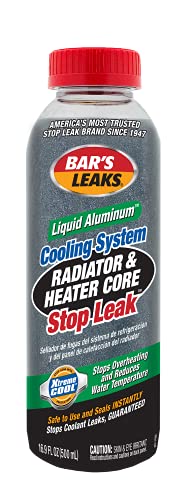
Bar’s Leaks 16.9 oz Radiator Stop Leak uses a liquid aluminum-based formula that targets radiator and heater core leaks, seals gasket failures, and addresses freeze-plug weaknesses. The product is designed to work with plastic, aluminum, and metal radiators, offering a versatile approach to sealing leaks across different cooling-system materials. A key feature is its capacity to lower the risk of overheating by containing leaks promptly, potentially reducing coolant loss between repairs. The formula aims to seal both internal and external leaks while remaining compatible with standard antifreeze blends. Users should ensure compatibility with their coolant type and follow the recommended dosage for optimal results.
Beyond sealing, this product claims to assist with heater core leaks and gasket seepage, making it a practical option for broader cooling-system defense. The aluminum content helps form a strong barrier against seepage, though users should be mindful of the time needed for the seal to set as the engine cools. As with all stop-leaks, the long-term success depends on addressing the root cause of the leak and ensuring that the cooling system is clean and free of debris prior to application.
Bar’s Leaks Radiator Stop Leak 11 Oz

The 11-ounce Bar’s Leaks Radiator Stop Leak uses a pelletized formula designed to seal internal, external, and coolant-to-oil leaks. It is advertised as effective for larger leaks and is described as safe for plastic, aluminum, and metal radiators, as well as heater cores, blocks, heads, gaskets, and freeze plugs. A notable feature is rust and corrosion inhibition, aided by a water-pump lubricant that can protect the pump seal during operation. The product is marketed as suitable for use with various antifreeze blends and different radiator configurations. Users should consider leak size, system materials, and the potential need for a more permanent repair if leaks persist after application.
Pelletized formulations typically require some enlargement of the stop seal over time, so expect a window for the cure to take effect. The product’s design aims to address both ongoing leaks and residual seepage, reducing oil-coolant contamination scenarios. When using pelletized stop-leaks, it is important to monitor the cooling system for changes in pressure, temperature, and coolant color, and to follow manufacturer dosage instructions to minimize unintended blockages or residue buildup.
Parts Express Dike Radiator Stop Leak

Parts Express Dike Radiator Stop Leak is designed to stop radiator leaks rapidly and works with standard and permanent antifreezes. It’s positioned as a broad-spectrum solution that seals leaks in radiators, seals around gaskets, and minimizes seepage into engine compartments. The formula emphasizes compatibility with antifreeze blends, aiming to prevent further loss of coolant while maintaining system integrity. It may be particularly appealing for users facing quick fixes in fleets or vehicles that require minimal downtime. As with other stop-leaks, the timing of results can vary based on leak size and radiator condition, so monitoring after application is advised.
In practice, this product is often selected for its straightforward application and quick action. It complements routine maintenance by helping to stabilize the cooling system, especially in vehicles with known gasket or hose connection vulnerabilities. For best results, ensure the cooling system is clean and there are no pre-existing blockages before applying, and verify the seal after a short drive to confirm a consistent leak-free state.
Radiator Stop Leak Sealer Conditioner

The Radiator Stop Leak Sealer Conditioner offers a 20-gram tube designed to seal leaks across metal, plastic, and rubber components. It is marketed as compatible with all antifreeze types, which makes it a versatile option for mixed-glaze cooling systems. The product highlights a quick-fix capability with a long-lasting seal, while also providing maintenance benefits such as rust prevention and water-pump lubrication. This makes it a good choice for drivers who want a proactive solution that protects the cooling system over time rather than a single repair. Dosage and application timing should align with the product’s guidelines to maximize effectiveness.
As a sealer conditioner, it emphasizes ongoing protection rather than an emergency-only fix. Its compatibility with multiple materials and antifreeze varieties makes it suitable for diverse vehicle fleets and DIY enthusiasts. When using any sealer conditioner, it is prudent to perform a coolant system inspection after application to verify that leaks have ceased and that no new leaks have appeared. Regular monitoring helps ensure the stop-leak remains effective across varying driving conditions.
Buying Guide
When shopping for a radiator stop leak intended for plastic components, consider these factors to choose the right product for your vehicle and climate:
- Plastic compatibility: Look for explicit mentions of plastic components and gaskets, as modern cooling systems increasingly rely on plastic housings and connectors.
- Antifreeze compatibility: Ensure the product is safe with your current antifreeze type and concentration to avoid chemical reactions or clouding.
- Leak type and size: Pelletized formulas often aim at larger leaks, while liquid sealants can address smaller seepage in a broader range of components.
- Material safety and corrosion protection: Check for rust and corrosion inhibitors to protect metal parts like blocks and water pumps.
- Application method: Some products pour directly into the radiator; others require mixing or specific dosing. No-drain options are preferable when possible but verify proper system conditions.
- Long-term maintenance: Consider whether the product provides ongoing protection (lubrication for pumps, seal reinforcement) or is a one-time fix.
- Compatibility with heater cores and thermostats: Some formulations also seal heater-core leaks or other peripheral passages in the cooling loop.
- OEM and user feedback: Look for endorsements or manufacturer notes indicating compatibility with a wide range of vehicles, including trucks and RVs.
- Warranty and safety notes: Review any cautions about use with specific engine types, high-mileage systems, or prior repairs.
| Product | Plastic Safe | Seals Leaks | Antifreeze Compatible | Rust Inhibition | Notes |
|---|---|---|---|---|---|
| Bar’s Leaks 1109 | Yes | Permanent seal | Yes | Not specified | One-step pour into radiator; no draining required |
| Bar’s Leaks 16.9 Oz | Yes | Seals leaks (radiator/heater core) | Yes | Not specified | Seals gasket and heater-core leaks; can lower overheating risk |
| Bar’s Leaks 11 Oz | Yes | Seals leaks (various) | Not specified | Yes | Pelletized formula; treats coolant-to-oil leaks |
| Parts Express Dike | Not specified | Stops leaks quickly | Yes | Not specified | Works with all standard antifreezes |
| Sealer Conditioner | Yes | Seals leaks | Yes | Not specified | All-metal, plastic & rubber safe; maintenance benefits |