Choosing the right oil for a motorcycle with a non-synthetic or conventional lubrication approach can influence engine cleanliness, clutch performance, and maintenance intervals. This guide highlights a conventional option and several synthetic alternatives to help riders compare features, compatibility, and performance across common engine designs.
| Product | Brand | Viscosity | Type | Notes |
|---|---|---|---|---|
| Lucas Oil 10767 High Performance Conventional SAE 10W-40 Motorcycle Oil – 1 Quart | Lucas Oil | 10W-40 | Conventional | Lower oil temperatures; Longer oil life; Longer component life |
| Lucas Oil 10702 SAE 20W-50 Synthetic Motorcycle Oil – 1 Quart Bottle | Lucas Oil | 20W-50 | Synthetic | Longer oil life; Meets API SG/SF/CC/CD; JASO MA and MA-2; ACEA A3 |
| Valvoline 4-Stroke Motorcycle Full Synthetic 10W-40 Motor Oil 1 Quart | Valvoline | 10W-40 | Synthetic | Enhanced friction protection; Wet clutch compatibility; Superior wear protection |
| TRIAX XTerra 4T 10W-40 Full Synthetic 4 Stroke Engine Oil | Triax | 10W-40 | Synthetic | Advanced ester formulation; Exceeds JASO MA2 and API SL/SN; OEM compatibility |
| Castrol Power1 4T 10W-40 Full Synthetic Motorcycle Oil | Castrol | 10W-40 | Synthetic | Trizone technology; Race-derived performance; Clutch protection |
Lucas Oil Conventional 10W-40 For Motorycles

Lucas Oil 10767 provides a conventional formula designed to reduce operating temperatures and extend oil and component life. It is suitable for older or standard motorcycle engines that call for a conventional oil with reliable protection. This option can be appealing for riders emphasizing simple, well-known base oil chemistry with steady viscosity and robust film strength under typical riding conditions.
Lucas High-Performance Synthetic 20W-50
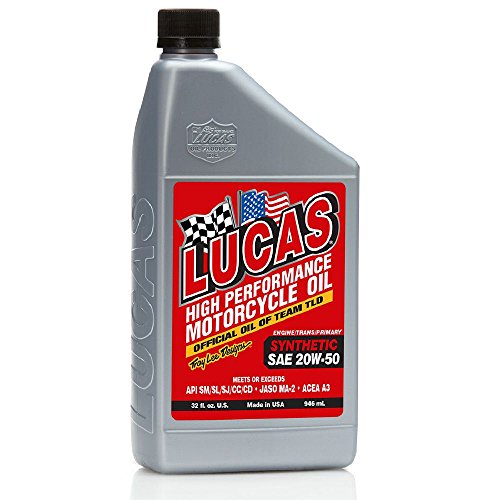
Lucas Oil 10702 is a synthetic motorcycle oil formulated for higher temperature operation with a 20W-50 grade. It emphasizes longer oil life and broad API/JASO compatibility, making it compatible with a wide range of air- and water-cooled engines. This option is favored by riders seeking extended intervals and strong film strength for hot-weather use or high-load riding.
Valvoline 4-Stroke Full Synthetic 10W-40

Valvoline 4-Stroke Motorcycle Full Synthetic 10W-40 is designed for high-performance engines with wet clutches. It provides friction protection and wear resistance to support smooth shifting and longer engine life, particularly in demanding riding conditions. This oil targets riders who want maximum protection from synthetic formulations and modern additive technology.
TRIAX XTerra 4T 10W-40 Full Synthetic

Triax XTerra 4T 10W-40 is a full synthetic engine oil formulated for motorcycles, ATVs, and snowmobiles. It emphasizes OEM compatibility and high-temperature stability, with an ester-based formulation designed to minimize wear and support clutch performance under varied riding conditions. It is positioned for riders who demand consistent performance across seasons and climates.
Castrol Power1 4T 10W-40 Full Synthetic

Castrol Power1 4T 10W-40 leverages Trizone technology to protect engine, clutch, and gearbox. It is designed to deliver responsive acceleration and stable high-temperature performance while protecting against wear. The announced benefits include improved clutch feel and sustained performance in both air- and water-cooled engines, making it a strong pick for riders chasing race-inspired protection.
Additional Considerations For Non-Synthetic Options

Non-synthetic (conventional) oils are typically less expensive and can work well in machines designed for mineral-based formulations. They may require more frequent oil changes in hot climates or high-mileage engines. When choosing between conventional and synthetic oils, consider OEM recommendations, engine design, and maintenance schedules. Synthetic oils generally offer superior protection at higher temperatures and longer intervals, but conventional oils can be adequate for older or simpler engines and typical riding patterns.
Buying Guide
- Viscosity and climate: 10W-40 is common for many bikes in moderate climates, while 20W-50 handles hotter conditions and older engines.
- Oil type and compatibility: Wet clutches require oils rated for clutch compatibility. Check API and JASO specifications to match manufacturer requirements.
- Conventional vs synthetic: Conventional oils are often cheaper and adequate for standard use; synthetic offers better protection under heat and stress and longer intervals in many cases.
- OEM specifications: Always verify that the oil meets or exceeds the OEM’s recommended spec, including MA/M2, API SL/SN, or specific manufacturer guidelines.
- Maintenance intervals: Heavier use, racing, or extreme temperatures may justify synthetic oils and shorter service intervals for conventional oils.
- Engine design considerations: Clutch systems, transmission integration, and engine materials may influence oil choice and change frequency.