Inline fuel filters protect engines from contaminants that can clog fuel lines, injectors, or carburetors, helping maintain steady performance and prolonging engine life. Modern inline filters come in various sizes, materials, and features—from built‑in gaskets and clear housings for visual inspection to magnetized elements that capture metal particles. The five options highlighted here represent well‑established brands and versatile designs suitable for lawn mowers, small tractors, generators, motorcycles, and other small engines. This guide explains what to look for and compares key specs to help you pick the best inline fuel filter for your setup.
To save you time, the table below briefly summarizes five representative inline filters, focusing on compatibility, standout features, and intended use. Each product is linked in its own section below for quick shopping access.
| Product | Brand | Notable Feature |
|---|---|---|
| Wix 33033 Inline Fuel Filter | Wix | Durable housing with built‑in gaskets; 3/8″ clamp‑on inlet/outlet |
| EVIL ENERGY Inline Fuel Filter | EVIL ENERGY | Universal compatibility with adapters (AN6/8/10); aluminum can |
| CarBole 9748 Inline Fuel Filter | CarBole | Clear glass view; 3/8″ hoses; 200 mesh |
| APE RACING Inline Fuel Filter Replacement | APE RACING | High flow, suitable for 1/4″ lines; long design |
| Wix 33040 In-Line Filter | Wix | Complete inline filter with built‑in gaskets; easy replacements |
Wix 33033 Inline Fuel Filter

The Wix 33033 inline filter is designed for robust reliability in small engines and lawn equipment. It features a clamp‑on inlet and outlet size of 3/8 inch, making it a good fit for many standard fuel lines found on mowers, generators, and compact tractors. A key benefit is its built‑in gaskets, which simplify installation and reduce the risk of gasket misalignment during mounting. This construction supports steady fuel flow and minimizes common seal failures that can lead to leaks or contamination entry. The unit is built to operate under moderate pressure, aligning well with typical gasoline systems in residential outdoor equipment.
From a maintenance perspective, the Wix 33033 is straightforward to service. Its durable housing resists cracking and deformation, even in storage or under engine vibrations. The combination of a reliable seal and a clamp‑on design helps ensure a clean installation with minimal tools. Overall, this filter offers a practical balance of durability, ease of use, and compatibility for users who want a dependable inline option without complex fittings.
Performance considerations include its flow characteristics and compatibility with standard 3/8″ hoses. While it excels in everyday yard equipment, users with higher fuel pressures or specialized systems may need a different sizing or a model with higher PSI ratings. Still, for common outdoor power equipment and light-duty generators, the Wix 33033 delivers reliable filtration with straightforward upkeep and replacement timing.
EVIL ENERGY Inline Fuel Filter

EVIL ENERGY markets a universal inline fuel filter with flexible adapter options, addressing a wide range of fuel system configurations. The kit includes adapters for AN6, AN8, and AN10 fittings, enabling compatibility across different engines and brands. A mounting bracket helps keep the filter secure and visually tidy in the engine bay, which can be especially valuable for compact setups where space is at a premium. The body is constructed from an aluminum alloy with a stainless steel filter element, combining light weight with corrosion resistance for longer service life.
Sealing is supported by an O‑ring that provides a tight, leak‑free interface at the fittings and end caps. This helps minimize fuel leaks and stave off air ingress, which can disrupt fuel flow and engine performance. The combination of adaptable fittings, rugged materials, and a bracketed mounting option makes this model a versatile choice for enthusiasts who work with multiple machines or who frequently reconfigure their fuel lines.
One practical consideration is the availability of the adapters for your exact hose or line size and the space in your engine bay. While the universal approach is a strength, confirming the correct AN size and mounting clearance ensures a clean install with optimal fuel flow. This filter is well suited for users needing flexible fitment across various small engines and equipment types without swapping filters for each application.
CarBole 9748 Inline Fuel Filter
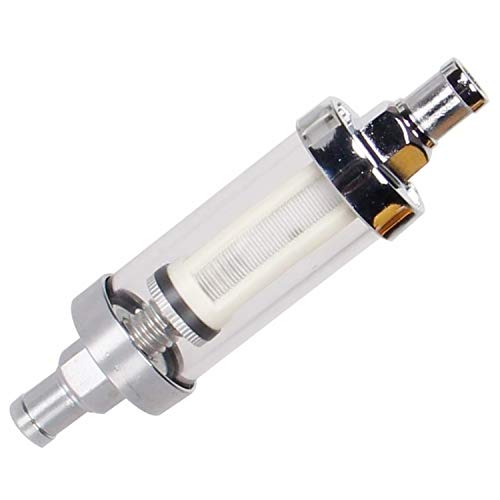
The CarBole 9748 filter emphasizes visibility and proactive fuel condition monitoring through its clear glass housing. This design lets technicians observe fuel color and clarity, which can help identify contamination or water ingress before it affects engine performance. The unit suits 3/8 inch hose connections, a common size for many lawn tractors and small engines, and is specified as a 200 mesh filter to trap smaller particles before they reach critical components.
With a transparent body, users can quickly assess when the filter needs service, reducing unexpected downtime. The 3/8″ inlet/outlet size aligns with many factory fuel lines, simplifying replacement without aftermarket adapters. The glass housing is a tradeoff: while it provides excellent visibility, it may require more careful handling to avoid cracking during installation or vibration. For users who value real-time fuel condition awareness, CarBole 9748 offers a practical, inspectable option.
In terms of protection, the 200 mesh filtration captures a wide range of particulates that can degrade performance or cause injector fouling. When replacement intervals are tied to visible contamination or fuel quality, this unit supports straightforward maintenance workflows. As with any glass‑bodied filter, ensure secure mounting and avoid overtightening to preserve the seal and housing integrity.
APE RACING Inline Fuel Filter Replacement

The APE RACING inline filter is presented as a high‑flow replacement suited for 1/4″ fuel lines. The design emphasizes increased flow capacity, with a longer profile compared to certain standard substitutes, which helps maintain fuel delivery under higher demand. It targets a broad range of equipment including motorcycles, small tractors, lawn mowers, snowmobiles, Go Karts, and generators, making it a versatile option for multi‑equipment users and shops that service several fuel systems.
Installation guidance notes importance of arrow‑direction alignment, ensuring fuel flow matches the intended path through the filter. The kit’s compatibility with standard 1/4″ lines simplifies replacement in many common engines. While the longer form can improve flow and service intervals, users should verify hose diameter and space constraints before purchasing. With straightforward mounting and broad applicability, APE RACING delivers a practical, high‑flow inline solution for many mid‑demand applications.
WIX Filters 33040 In-Line Filter

The Wix 33040 inline filter is marketed as a complete in‑line solution with built‑in gaskets, which simplifies installation and reduces the risk of leaks at the gasket interface. The filtration approach aims to enhance fuel cleansing performance, helping remove particulates before they can affect engine components. The compact, inline design makes it suitable for a variety of small engines and equipment that require quick, convenient filter changes, especially in limited service areas where ease of replacement matters most.
One notable advantage is the combination of durability and ease of maintenance. Built‑in gaskets support reliable seals, while the overall construction is designed for repeatable filter replacements. For users with a preference for simple maintenance routines and proven performance, Wix 33040 provides a dependable option that pairs familiar Wix engineering with straightforward service intervals. As with all inline filters, ensure the hose connections match the exact size and orientation required by your engine system.
Buying Guide
When choosing an inline fuel filter, several factors determine the best match for a given engine or outdoor machine. The following considerations help balance performance, durability, and ease of use across different brands and designs.
- Hose size compatibility: Common sizes are 1/4″, 5/16″, and 3/8″. Confirm your fuel line inner diameter and select a filter with matching inlet/outlet fittings or compatible clamp‑on connections. Some brands offer adapters or universal interfaces, like EVIL ENERGY, to cover multiple hose sizes.
- Filtration medium and micron/mesh rating: Higher filtration efficiency can protect injectors and carburetors but may increase flow resistance. CarBole’s 200‑mesh rating provides fine filtering, while others emphasize overall flow and simplicity with less emphasis on micron rating. If you operate ethanol‑blended fuels, consider filters rated for ethanol compatibility and with durable filter media.
- Visual inspection capability: Clear housings (as with CarBole) enable quick checks for water, sludge, or fuel color changes. This feature helps schedule maintenance before problems arise, especially on equipment with long service intervals.
- Durability and materials: Aluminum bodies, stainless steel filter elements, and polymer housings all offer different durability profiles. Aluminum and stainless components generally resist corrosion in outdoor environments and fuel exposure better over time.
- Mounting options and space constraints: Some filters include mounting brackets or brackets with a compact footprint, which is important in cramped engine bays. Check space for bracket clearance and ensure that vibrations won’t loosen fittings over time.
- Replacement and maintenance: Filters with built‑in gaskets simplify service. Consider whether you want a single‑pack purchase or a multi‑pack solution (like APE RACING’s pack) for ongoing projects or multiple machines.
- Applications and versatility: If you need a filter across different machines, a universal kit with multiple adapters (AN sizes) provides value. For dedicated lawn equipment, a tighter, purpose‑built inline filter may be sufficient and more cost‑effective.
- Installation direction and flow: Always align the filter so that the arrow on the housing (if present) points in the correct flow direction. Incorrect orientation can cause poor filtration and flow restriction.
In sum, the best inline fuel filter for you depends on hose size, desired maintenance cadence, and whether you value features such as a clear housing for inspection, or adapters that support multiple engines. For many typical lawn and outdoor power equipment setups, a filter with robust gaskets and a proven track record—such as the Wix or Wix‑brand options—offers a reliable balance of performance and ease of use. For users requiring flexible fitment across various machines, EVIL ENERGY’s adapter kit approach can simplify purchases and inventory. Always verify compatibility with your specific engine model and fuel system to ensure optimal filtration and performance.