For American boaters, a reliable handheld marine radio is a vital safety tool. Modern models offer floating designs, bright displays, weather alerts, and optional extras like GPS and Bluetooth. The following five radios represent strong choices, balancing durability, ease of use, and transmit power. They’re suitable for coastal days, lake crossings, and offshore trips alike, helping you stay connected and informed in a range of conditions. Use this guide to compare core specs, durability, and everyday practicality before you buy.
| Product | Brand | Power | Key Features |
|---|---|---|---|
| Cobra MR HH350 FLT | Cobra | 6 W | Floating; Noise-cancelling mic; Backlit display; NOAA weather |
| Uniden Atlantis 275 | Uniden | 6 W | IPX8 submersible; Large LCD; Emergency strobe; NOAA alerts |
| Uniden MHS75 | Uniden | 1/2.5/5 W | JIS8 waterproof; Floating; All USA/International/Canada channels |
| Cobra MR HH600FLTBTGPS | Cobra | 1/3/6 W | Bluetooth; GPS; Rewind 20s; NOAA weather |
| Standard Horizon HX210 | STANDARD HORIZON | 6 W | Floating; IPX7; Emergency strobe; Large display |
Cobra MR HH350 Floats Marine Radio

The Cobra MR HH350 FLT is a compact 6-watt handheld radio designed to stay functional in rough conditions. It floats, making recovery easy if it slips overboard, and the noise-cancelling microphone helps keep voices clear in windy or engine-rich environments. A backlit orange LCD remains readable at night, on a bright day, or in spray, aiding quick checks during emergencies.
From the feature set, transmit power is configurable to 1, 3, or 6 watts, supporting short- and longer-range communication without unnecessary battery drain. NOAA weather capability provides timely forecasts while you’re at sea, enhancing safety during poor visibility conditions. The floating design and bright display make this model particularly well suited to coastal days and open-water trips where reliable connectivity matters.
- Noise-Cancelling Microphone
- 6 Watt VHF with 1/3/6 W settings
- Backlit orange display and floating design
- NOAA weather compatibility
Uniden Atlantis 275 Handheld VHF Radio
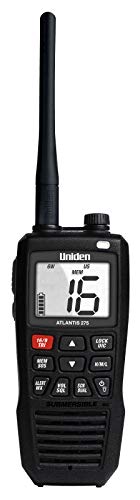
The Atlantis 275 delivers robust 6 watts of power in a compact, IPX8 submersible body, making it a top choice for offshore use or rough weather. An emergency strobe light and built-in flashlight add situational awareness when visibility is low. Its large dual-color screen with a paper-white display improves readability in bright sun or night, helping you navigate channels and warnings quickly.
Designed for real-world usability, the Atlantis 275 features the largest LCD in its class (25mm high by 40mm wide) with a white daytime backlight and red night backlight. It’s built to be a dependable deck companion, easy to grab when seconds count. With full USA/International/Canadian channel coverage and NOAA weather alerts, it’s well equipped for coastal adventures and international trips alike.
- Emergency Strobe Light and Built-in Flashlight
- Large 25mm x 40mm LCD with dual backlight
- 6 Watts; IPX8 Submersible
- All USA/International/Canadian channels; NOAA alerts
Uniden MHS75 Waterproof Handheld VHF Radio

The Uniden MHS75 emphasizes rugged reliability with a JIS8 waterproof rating and a floating design. It supports selectable transmit powers of 1, 2.5, or 5 watts, enabling you to conserve battery life during longer journeys or extend range when needed. The compact form factor makes it easy to stow on deck or in a personal flotation device for quick access.
It covers All USA/International/Canada channels, ensuring cross-border communication remains possible on multi-day trips. Built to withstand spray and splashes, the MHS75 provides a straightforward interface for rapid calls and confirmations in busy marinas or open water, making it a practical choice for everyday seafaring alike.
- JIS8 Waterproof and Floating
- 1/2.5/5 Watt Switchable
- All USA/International/Canada Channels
- Rugged, Compact Design
Uniden Atlantis 155 Handheld VHF Radio
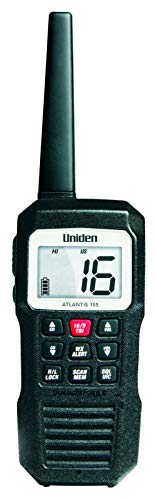
The Atlantis 155 is a floating, IPX8 submersible radio with a dual-color screen and NOAA Weather Alert capability. Its design prioritizes readability and quick access to critical data on the water. The device is built to stay within your reach during recreational use or more serious offshore outings, providing dependable connectivity when you need it most.
With a large LCD and backlighting options, the Atlantis 155 remains legible across lighting conditions. The model supports all USA/International/Canadian marine channels and emphasizes safety through weather alerts, making it a solid option for weekend sailors and cross-border travelers who value clear, immediate communication.
- Floating IPX8 Submersible
- Dual-Color Screen with Day/Night Backlight
- NOAA Weather Alert
- All USA/International/Canadian Channels
Standard Horizon HX210 Floating VHF Transceiver

The Standard Horizon HX210 is a rugged 6-watt handheld with a floating, IPX7-rated shell. It features a water-activated emergency strobe and an oversized dot-matrix display, enhancing legibility in bright sun and adverse weather. The package includes a rapid charger cradle, which helps minimize downtime between trips or during long days on the water.
The HX210 also offers a compact case design and an easy-to-use E20 menu system, making setup straightforward for new users. The built-in FM receiver expands listening options when radio traffic slows, while its solid construction and warranty provide dependable performance for coastal skippers and weekend mariners alike.
- Floating / IPX7 Waterproof
- Water-Activated Emergency Strobe
- Oversized Dot Matrix Display
- Easy to Operate Menu System
Buying Guide
Key purchase considerations
Power and range matter. Handheld radios typically offer 1 to 6 watts of transmit power. Higher wattage enables longer reach in open water but can drain batteries faster. For continued reliability near shore or on cross-bay routes, a 3–6 watt model is often ideal, while 1–2.5 watts can suffice for dockside calls or close-quarters coordination.
Water resistance, buoyancy, and durability
Floating designs help prevent loss if the radio is dropped overboard, but overall water resistance is equally important. Look for IP ratings (IPX7 or IPX8) and a floating feature, especially for offshore trips or stormy conditions. Durable housings and rugged seals reduce failure under spray and rain.
Weather alerts, safety, and scanning features
NOAA weather alerts keep crews informed about storms and forecast changes. Other safety features to consider include emergency strobe lights, DSC capabilities for distress signaling, and memory scan for rapid access to channels you use most. A loud, readable display with backlighting is helpful during early sunrise or late evening operations.
Channel coverage and interoperability
Choose models with extensive channel coverage across the USA, international, and Canadian marine bands if you boat across borders or into international waters. A model with a large LCD and intuitive channel navigation reduces the time spent tuning frequencies and improves situational awareness in busy harbors.
Extra features and user experience
GPS and Bluetooth can add significant convenience with hands-free calling and precise location sharing, useful for group trips or DSC calls. A rewind feature helps reconstruct conversations in noisy environments. Battery life, charging options, and weight also influence day-to-day usability on a moving deck.
Balancing value and fit
When choosing, weigh the radios’ core protections (water resistance and floating capability) against comfort features (display readability, ease of use, and extra tools like strobe lights or flashlights). For multi-day excursions or cross-border use, prioritize models offering broad channel coverage, NOAA alerts, and robust build quality. All five models above provide a mix of these strengths, enabling you to select based on your typical voyages and crew preferences.