Whether you’re charging phones, running a mini fridge, or powering a coffee maker on the road, a reliable portable power station is essential for car camping. This guide reviews five top options, highlighting capacity, charging speed, weight, and versatility to help you pick a unit that fits your trips and power needs.
| Product | Capacity (Wh) | Continuous Power (W) | Weight (lbs) |
|---|---|---|---|
| Jackery Explorer 1000 v2 | 1070 | 1500 | 23.8 |
| Jackery Explorer 2000 v2 | 2042 | 2200 | 39.5 |
| Jackery Explorer 300 | 293 | 300 | 7.1 |
| Anker SOLIX C300 | 288 | 300 | ≈6.0 |
| VTOMAN FlashSpeed 300 | 230 | 300 | 7.4 |
Note: All data reflects listed specs and typical use cases. When selecting, consider your device mix, trip duration, and how often you’ll need to recharge.
Jackery Explorer 1000 v2: Power For Campsites And Emergencies

The Explorer 1000 v2 combines a high output with portability. It delivers up to 1,500W AC power and a 3,000W surge, making it capable of running a small fridge, a coffee maker, or a portable heater during outdoor trips. With a lithium iron phosphate (LiFePO4) battery of 1,070Wh, it offers enhanced longevity and stability for extended trips. Weighing 23.8 lbs, it includes a foldable handle for easier transport and a compact footprint suitable for car camping setups.
Key features include:
- 1,500W continuous AC output; 3,000W surge
- 1,070Wh capacity with LiFePO4 chemistry
- One-hour fast charging with emergency charging via the Jackery App
- ChargeShield 2.0 safety tech for safer, faster recharging
- Long lifespan: over 4,000 cycles with retention above 70%
Jackery Explorer 2000 v2: Heavy-Duty Camping Power

The Explorer 2000 v2 is engineered for larger power demands, offering a total output of 2,200W with a massive 2,042Wh LiFePO4 battery. It’s designed to handle home backup scenarios, extended off-grid expeditions, and RV excursions. The unit emphasizes portability for its class, tipping the scales at 39.5 lbs, yet delivering strong performance for heavier devices and multiple loads simultaneously.
Notable capabilities include:
- 2,200W AC output; 2,042Wh capacity
- USB-C PD 100W for fast charging devices
- CTB technology for secure, EV-like construction
- AC Fast Charging from 0 to 80% in 66 minutes; full charge in about 102 minutes
- Solar charging in as little as 6 hours with 400W panels
Explorer 300: Compact Yet Capable Backup Power
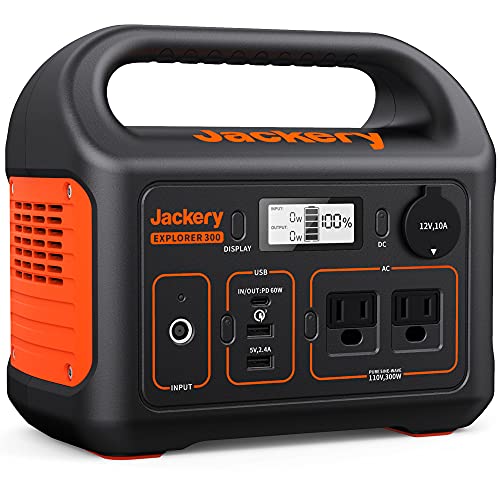
The Explorer 300 delivers essential off-grid charging in a light, compact form. With a 293Wh battery and two Pure Sine Wave AC outlets, it supports everyday camping needs and small device charging. It also features multiple output options, including PD USB-C and USB-A ports, enabling a range of devices to stay powered during outdoor adventures.
Highlights include:
- 293Wh lithium battery; two Pure Sine Wave AC outlets
- 2x AC outlets, plus PD USB-C and USB-A ports
- Fast recharge to 80% in about 2 hours via wall outlet and 60W USB-C
- Lightweight at 7.1 lbs for easy portability
VTOMAN FlashSpeed 300: Ultra-Light Power For Travel

The VTOMAN FlashSpeed 300 focuses on portability without sacrificing essential charging ability. Weighing about 7.4 lbs, it packs 230Wh and 300W continuous power across multiple outlets, including USB-C PD, USB-A, and two AC outlets. It’s designed for quick recharges and steady performance for camping, RV trips, or as a home backup option during outages.
Key specifications:
- 230Wh LiFePO4 battery; 300W continuous power
- PD 100W USB-C for fast charging
- 7 Outlet configurations for diverse devices
- Very portable with a compact 7.4 lb form factor
EHOM EP350: Fast-Charging Power On The Go

The EHOM EP350 offers a compact 299Wh capacity with a 350W rated output (700W peak). Its NitroGo fast charging can push to 80% in about 55 minutes, delivering a quick top-up for travelers. It supports multiple recharge methods including solar input (up to 200W with MPPT support) and car or wall charging, making it adaptable for varied camping scenarios.
Attributes include:
- 299Wh capacity; 350W rated output (700W peak)
- NitroGo fast charging to 80% in 55 minutes
- Solar input up to 200W via MPPT
- Multiple recharge options for flexible camping setups
ALLWEI Portable Power Station 300W: Robust Camping Power
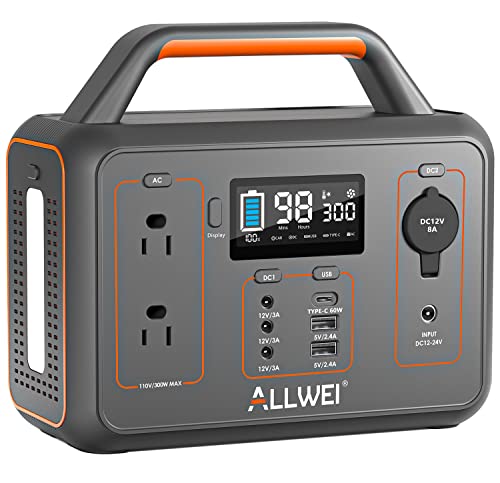
The ALLWEI unit emphasizes versatility with nine output ports and a 280Wh capacity, capable of running CPAP machines, small appliances, and multiple devices concurrently. It includes AC, USB, DC, and car outlets, plus a built-in MPPT controller for efficient solar charging. A compact footprint makes it suitable for car camping, RV trips, and emergency power at home.
Key points include:
- 280Wh capacity; 300W rated output
- Nine output ports, including 110V AC and PD USB-C
- 3 charging methods: AC, car, and solar
- Designed for CPAP and other essential devices during outages
Anker SOLIX C300: Compact 300W Power Bundle

The Anker SOLIX C300 delivers 288Wh of energy with 300W (600W surge) capacity in a compact design. It offers 140W USB-C fast charging, multiple ports, and a streamlined form factor that is travel-friendly for camping, RVing, or emergency power. It’s designed to power a range of devices while staying light and easy to stow in a vehicle.
Highlights include:
- 288Wh battery; 300W continuous (600W surge)
- 8 device charging ports; 140W USB-C fast charging
- Travel-friendly and compact, a practical car camping companion
Buying Guide: Key Purchase Considerations And Comparisons
When choosing a portable power station for car camping, consider capacity versus weight, the number and type of outlets, charging speed, and battery chemistry. LiFePO4 cells last longer and tolerate more cycles, which benefits frequent campers. If you expect to run larger appliances (fridges, heaters, or microwaves), prioritize higher continuous power (W) and higher surge capacity
Power needs: List devices you’ll run and estimate total watt-hours per day. For minimal setups, a smaller unit in the 200–500Wh range may suffice. For longer trips with larger devices, aim for 1,000Wh+ and multiple AC outlets.
Recharging options: A mix of wall charging, car charging, and solar charging gives flexibility. Look for MPPT solar charging to maximize solar input, especially in shaded or variable sun conditions. Faster recharging reduces downtime between outings.
Portability: Weight and handle design influence how easily you’ll move units in and out of a vehicle or campsite. If you travel solo or hike to sites, lighter models with durable construction are advantageous.
Durability and safety: LiFePO4 chemistry reduces thermal risk and extends cycle life. Check for safety features like overcharge protection, short-circuit protection, and battery management systems (BMS) that protect both the unit and connected devices.
Expandability: Some power stations support modular solar panels or daisy-chaining for higher input. If you plan long-range trips, consider a system that can scale with new panels or higher-capacity packs.
Environmental considerations: In hot climates, heat management is important. Look for units with venting and thermal safeguards to maintain performance in vehicles and campsites.