For long-haul drivers and fleet operators, a rugged, reliable truck GPS is essential. Modern systems blend vehicle-aware routing, real-time traffic, and high-resolution imagery to help you avoid delays and secure safe, efficient turns into loading docks and weigh stations. This guide highlights five top options, with attention to large and small screens, custom truck routing, and Bird’s Eye imagery. Each model supports critical alerts for bridge heights, weight limits, and sharp grades, while offering routes tailored to your truck’s size and load. Read on to compare features and practical distinctions for American fleets.
| Product | Brand | Key Benefit |
|---|---|---|
| Garmin d?zl OTR610, Large, Easy-to-Read 6 GPS Truck Navigator | Garmin | Bright 6″ display with custom routing and Bird’sEye imagery |
| Garmin Dezl OTR500, 5.5″ Truck Navigator | Garmin | Compact, crisp screen with PrePass notifications and tailored routing |
| Rand McNally TND 550 | Rand McNally | Real-time traffic with 3-D junctions and landmarks |
| Garmin dezl OTR620, 6″ Truck Navigator | Garmin | Direct Birdseye imagery and load-friendly routing |
| Garmin Dezl OTR820, 8″ Truck Navigator | Garmin | Large display with comprehensive routing and pre-pass features |
Garmin d?zl OTR610 Truck Navigator

The Garmin d?zl OTR610 is a 6-inch truck navigator designed for clear in-cab viewing. It offers custom truck routing based on the vehicle’s size and weight, with alerts for bridge heights, weight limits, and sharp curves. Its BirdEye Satellite Imagery enables high-resolution aerial views of loading docks, truck entrances, and security gates to help plan precise dock approaches. The device emphasizes practical route decisions, with guidance that accounts for road signs and conditions. Always defer to real-world conditions when needed, as routing suggestions may vary by area.
- 6″ high-resolution touchscreen
- Custom truck routing by size and weight
- BirdEye Satellite Imagery for destination planning
Garmin Dezl OTR500 Truck Navigator

The Dezl OTR500 features a bright 5.5-inch touchscreen for easy viewing on the road. It includes built-in PrePass notifications that help drivers save time at weigh stations by providing on-screen bypass options. The device supports custom truck routing based on truck size and weight, with alerts for upcoming bridge heights and sharp curves. Note that some routing features may not be available in all areas, and drivers should always defer to posted signs and current road conditions.
- 5.5″ high-resolution display
- PrePass notifications for weigh stations
- Custom routing by vehicle size and weight
Rand McNally TND 550 Truck Navigator
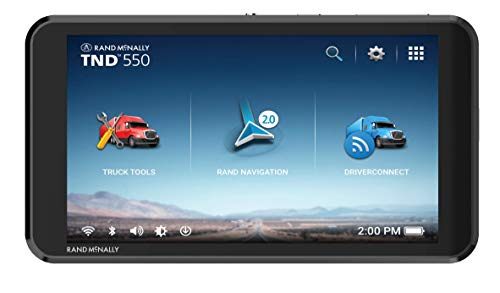
The Rand McNally TND 550 emphasizes real-time traffic data with 3-D junction views and 3-D buildings and landmarks for intuitive navigation. This model is designed to keep drivers aware of evolving road conditions and to simplify complex interchanges. While it focuses on broad navigation features, users should evaluate whether its routing and map updates align with their typical routes and the preferred display size for cab visibility.
- Real-time traffic updates
- 3-D junction and landmark visuals
- User-friendly interface for long hauls
Garmin dezl OTR620 Truck Navigator

The Dezl OTR620 brings a 6-inch display with robust truck routing based on vehicle size and weight. It provides alerts for bridge heights and sharp curves, and supports Birdseye Direct Satellite Imagery for high-resolution overhead views of destinations, including loading docks and truck entrances. The system is designed to help drivers anticipate docking and gate access, while always deferring to posted signs and road conditions when routing decisions could be area-dependent.
- 6″ high-resolution display
- Custom routing by vehicle specifications
- Birdseye Direct Satellite Imagery for destination views
Garmin Dezl OTR820 Truck Navigator

The OTR820 offers an 8-inch display for expansive cab visibility and easier route planning across maps and lists. It supports custom truck routing based on vehicle size and load, with alerts for height restrictions, weight limits, and hazardous conditions. BirdEye imagery enhances arrival planning by providing high-resolution overhead views of destinations, and the device typically includes bundles like a 32GB SD card and cleaning kit to aid setup and maintenance. It emphasizes durable, professional-grade navigation for long hauls.
- 8″ high-resolution touchscreen
- Custom routing for truck specifications
- BirdEye imagery and destination previews
Buying Guide
Key purchase considerations for commercial truck GPS systems include screen size, routing intelligence, and imagery quality. Larger displays improve in-cab readability, while 6″ to 8″ screens balance visibility with dash space. Routing logic should account for vehicle size and weight, hazardous materials, and seasonal restrictions, with clear alerts for bridges, weight limits, and steep grades. Bird’s Eye or direct satellite imagery aids dock and gate planning, reducing on-site uncertainty. PrePass or weigh-station notifications can save time, but users should always verify current conditions against posted signs and live road reports.
Data accuracy and map updates are critical for long routes. Consider map update frequency, regional coverage, and access to real-time traffic data. Community-driven insights or user reviews can supplement official maps, but reliability varies by provider. A robust GPS should offer durable mounts, easy touchscreen operation, and straightforward setup with included memory cards or cleaning kits when applicable. Evaluate bundled accessories against the total cost of ownership, and ensure compatibility with fleet management tools if used in enterprises.
Multiple perspectives help ensure depth in decision making. For instance, larger devices excel in easy-to-read displays but may demand more dashboard space. Smaller units can still provide advanced routing and PrePass features, ideal for lighter duty trucks or urban loops. Imagery quality, either BirdsEye or direct satellite views, matters most for load-in and dock access planning. Finally, verify that the chosen model’s features align with your typical routes, weigh stations, and loading facilities to maximize efficiency and safety on the road.