Ford F-150 Lightning owners have a growing set of charging options, from wireless charging pads integrated into the center console to adapters that unlock faster charging networks for non-Tesla EVs. This guide highlights five top picks that fit the Lightning and its daily use, focusing on fit, charging speed, durability, and ease of installation. Whether you want a dock that keeps your device within reach, a high‑current adapter for road trips, or a multi‑port car charger for portable devices, these picks cover a range of needs. Reviewers can compare how each solution balances convenience with safe, effective charging on the go.
| Product | Brand | Key Benefit |
|---|---|---|
| TWRAPS Magnetic Wireless Charger for Ford F-150 Lightning | TWRAPS | MagSafe-friendly wireless charging in the center console |
| LJH NACS to CCS1 Adapter for Ford Lightning | LJH | Access to Tesla Supercharger network for CCS1 EVs |
| RAMATA Tesla NACS to CCS Adapter for Ford F-150 | RAMATA | High‑power adapter with broad EV compatibility |
| CarQiWireless Wireless Charger for Ford F-150 Center Console | CarQiWireless | Integrated, tidy wireless charging and storage |
| Caiinei MFi Fast Car Charger with 6FT Cable | Caiinei | Dual USB fast charging with a long, coiled cable |
TWRAPS Magnetic Wireless Charger for Ford F-150 Lightning

The TWRAPS wireless charging pad is designed to integrate with the Ford F-150 Lightning’s interior, offering a dedicated, secure place for smartphones in the center console. It supports MagSafe-enabled iPhones and other devices with MagSafe cases, delivering up to 10W for iPhones and up to 15W for certain Android devices. The strong magnet helps keep the phone steady during driving, while the design emphasizes heat management to minimize device warmth during charging. Installation is straightforward, and the setup reduces clutter from cables in the cabin. Real-world performance depends on phone model and case compatibility, but users report reliable, low-heat charging in everyday use.
Key considerations include ensuring your phone case remains compatible with MagSafe alignment and confirming that the vehicle’s interior space accommodates the pad without obstructing gear shifts or storage compartments. The pad’s ability to fast-charge multiple devices as you drive makes it a practical daily-use accessory for Lightning owners who want a clean, cable-free cockpit.
LJH NACS to CCS1 Adapter for Ford Lightning

The LJH NACS to CCS1 adapter expands charging versatility by enabling CCS1 EVs to access the Tesla Supercharger network. It is marketed for broad compatibility, including Ford F-150 Lightning, Rivian R1T/R1S, GM EVs, Volvo, and more. A compact, weather-ready design is paired with a portable storage bag for safe transport. The adapter supports a high current rating of up to 500A at up to 1000V DC, offering the potential to add substantial range quickly under ideal conditions (roughly 150 miles in about 15 minutes). Real-world results depend on the Supercharger generation, vehicle capability, and environmental factors.
Users should verify network access permissions for their region and consider the availability of Tesla Supercharger ports in their typical routes. The adapter is a niche but powerful option for Lightning owners who frequently rely on fast charging outside home charging setups and want broader charging network access.
RAMATA Tesla NACS to CCS Adapter for Ford F-150
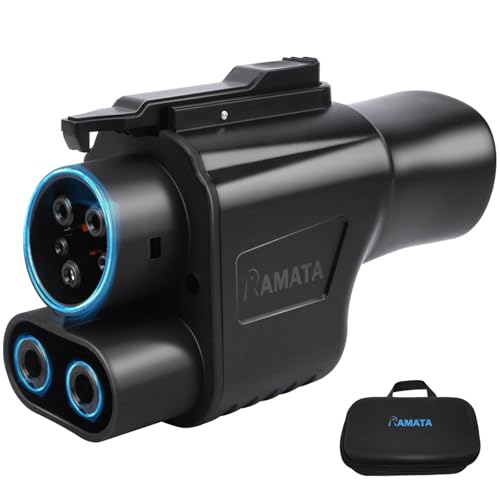
RAMATA’s NACS to CCS adapter targets a wide range of EVs, including Ford Mustang Mach-E, F-150 Lightning, and various GM models, plus Rivian and others. It features a robust 500A/1000V DC rating and a sturdy, weather-resistant construction designed for use in diverse climates. The adapter claims the ability to unlock more than 17,800 Tesla Supercharger ports, enabling CCS1-equipped vehicles to access the Tesla network in many locations. In practical terms, this can translate to faster charging options on long trips, though actual throughput and miles gained depend on the charger’s generation, vehicle capability, and environmental conditions.
Notable strengths include broad EV compatibility and the potential for rapid charging access on widely scattered networks. Potential buyers should assess whether their typical driving routes include frequent Supercharger access and whether the extra cost aligns with their travel patterns and charging needs.
CarQiWireless Wireless Charger for Ford F-150 Center Console

The CarQiWireless center console charger is designed specifically for Ford F‑Series trucks (F-150 models across years). It provides a dedicated wireless charging tray within the console along with storage features for small items, promoting an organized cabin. The charger supports wireless charging with compatible devices and cases that aren’t too thick. It also includes intelligent safety features such as foreign object detection, temperature control, and protection against overcharging. The design emphasizes heat management to minimize battery stress during long drives and frequent charging sessions.
Installation is generally straightforward for models listed in the product description. This choice suits Lightning owners who want a built-in charging tray with extra storage, reducing clutter while keeping phones within arm’s reach during daily commutes and trips.
Caiinei MFi Fast Car Charger with 6FT Cable

The Caiinei car charger focuses on fast charging for iPhone devices with MFi certification and a long, flexible coiled cable that extends up to 6 feet. It uses a dual USB port design delivering up to 4.8A total output, providing up to 2.4A per port when one is in use and up to 4.8A when both ports are active. The built-in smart charging chip recognizes devices and adjusts output to protect the battery, while the dynamic temperature sensor helps manage heat and prevent overheating. This option is ideal for travelers who need reliable, fast charging for multiple devices without relying on wireless charging compatibility.
Consider this solution if you frequently charge multiple devices in a Lightning-equipped vehicle and prefer a robust, wired USB charging setup with a long reach. It complements other charging options without duplicating wireless charging capabilities.
Buying Guide
When choosing a charger setup for Ford Lightning, consider how you typically charge on the road, your device ecosystem, and how you prioritize convenience, speed, and durability. The Lightning uses a CCS1 charging standard, so adapters that claim broad network access can expand options, but real-world results depend on charger availability, network permissions, and vehicle compatibility. Wireless charging pads are best for quick, everyday use, while DC fast charger adapters can dramatically shorten long trips when compatible. For cabin organization, center-console solutions reduce clutter and keep devices within reach while driving. Always verify heat management, safety features, and weather resistance for outdoor or all-season use.
Key purchase considerations include charging speed, device compatibility, and installation effort. If you frequently travel on highways with long stretches between stops, a high-current adapter paired with a reliable charging network can dramatically improve trip times. If you value a neat interior and convenient daily charging, a wireless pad or a center-console charger may suit better. For multi-device households, a dual-port USB car charger adds versatility without sacrificing space. Finally, safety features such as FOD, short-circuit protection, and overvoltage protection help protect both your battery and devices during charging.
Quick Comparison
| Aspect | Best For | Notes |
|---|---|---|
| Wireless charging in console | Daily use, organization | TWRAPS and CarQiWireless offer integrated options |
| Access to broader networks | Road trips, long-distance charging | LJH and RAMATA adapters extend Teslas Supercharger access |
| High-current, multi-device charging | Multiple devices in one vehicle | Caiinei provides dual USB ports with fast charging |