Engine additives can help reduce wear, lower emissions, and improve overall efficiency. This article highlights five popular options and provides a buyer’s guide to help you choose the right product for gasoline and diesel engines, transmissions, and related systems. Each section includes an at-a-glance link to the product on Amazon for quick reference.
| Product | Brand | Type | Key Benefit |
|---|---|---|---|
| Prolube Oil Treatment (1QT) | Prolube | Oil Additive | Reduces wear, noise, and vibration |
| Liqui Moly Ceramic Wear Protection | Liqui Moly | Oil Additive | Less friction, smoother performance |
| Bardahl NoSmoke + StopLeak | Bardahl | Oil Additive | Reduces oil burning and seals leaks |
| Liqui Moly Pro-Line Engine Flush | Liqui Moly | Engine Flush | Cleans and flushes oil systems |
| TriboTEX Nano Oil Additive | TriboTEX | Oil Additive | Reduces wear with nano coating |
Choosing the right additive depends on engine type, maintenance goals, and existing wear concerns. The products below cover wear reduction, fuel efficiency, emissions, and engine cleanliness to help you decide which option best fits your vehicle’s needs.
Prolube Oil Treatment – 1QT
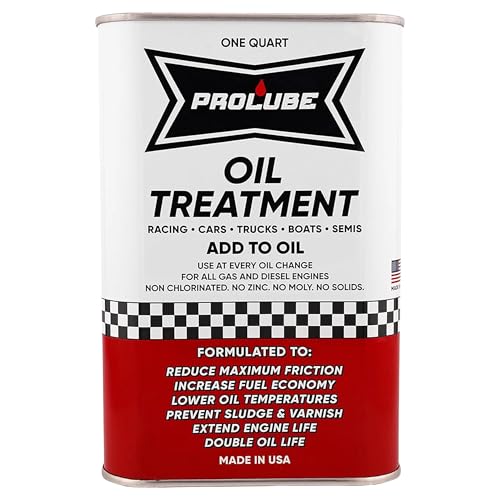
Prolube’s oil treatment is designed to boost engine performance, reduce noise and vibrations, and help engines run quieter and more efficiently under daily use or heavy-duty conditions. Its formula aims to lower friction, improve fuel economy, and extend engine life by protecting critical moving parts. The additive is compatible with gas and diesel engines and can be used in transmissions and differentials, offering a broad solution for drivers seeking smoother operation and reliable protection.
Liqui Moly Ceramic Wear & Tear Protection

Liqui Moly’s Cera Tec combines ceramic wear protection to reduce friction and wear in petrol and diesel engines. It is mixable with most motor oils and remains stable under high thermal and dynamic loads. The formulation is designed to be compatible with standard filters and seals, helping engines operate more smoothly while supporting longer service intervals and potentially lower maintenance costs.
Bardahl NoSmoke + StopLeak

NoSmoke + StopLeak is designed to address oil burning and excessive exhaust smoke while helping seal engine oil leaks. It aims to quiet noisy lifters and restore some seal integrity, contributing to improved emissions and cleaner operation. The additive can be beneficial for aging engines showing increased oil consumption or smoke, and it’s positioned as a multi-benefit formula for reliability and smoother performance.
Liqui Moly Pro-Line Engine Flush

Liqui Moly Pro-Line Engine Flush is designed to clean and flush oil systems in gasoline and diesel engines. It offers a gentle yet effective cleaning action to remove sludge and varnish buildup, helping seals and gaskets maintain integrity. This option prioritizes engine cleanliness and restoration of proper lubrication during oil-change intervals.
BestLine Racing Nano-Lubricant

BestLine Racing Nano-Lubricant uses diamond nano-technology to reduce friction by about 60% and protect engine components under high stress. It claims to improve power, extend oil-change intervals, and support quieter operation. Its formulation targets a broad range of vehicles including gasoline, diesel, hybrids, and racing engines, with emphasis on high-temperature endurance and broad compatibility.
Prolube Oil Treatment – 16oz

This larger 16-ounce variant of Prolube’s oil treatment follows the same goals: reducing wear, noise, and vibration while supporting fuel economy and horsepower gains. It emphasizes extended engine life, with claims of substantial wear reduction and improved lubrication across engine components for long-term protection and smoother performance.
Buying Guide: Key Considerations And Comparisons
Purpose and compatibility: Determine whether you need an engine oil additive, a fuel-system cleaner, or an engine-flush product. Verify compatibility with your engine type, oil grade, and filter system to avoid incompatibilities that could affect seals or performance.
Wear reduction and friction: Additives that form protective coatings or reduce friction can lower engine wear and noise. Nano-technology and ceramic additives often offer higher friction reduction but check for compatibility with your oil and vehicle age.
Fuel economy and emissions: Some formulas claim improved fuel efficiency and reduced exhaust smoke. If mileage and cleaner emissions are priorities, prioritize products marketed for friction reduction and burn efficiency, while monitoring for any changes in fuel consumption.
Maintenance scope: Consider whether the product works across multiple systems (engine oil, transmissions, differentials) or is specialized for a specific area. Multi-system additives can offer convenience but may dilute targeted performance in some cases.
Usage and intervals: Review recommended dosage, application frequency, and whether the product should be added at oil-change intervals or as a one-time treatment. Follow manufacturer instructions to maximize results and minimize risk.
Brand reputation and testing: Reputable brands with independent testing and clear ingredient disclosures can provide more reliable results. Look for coatings or technologies (e.g., ceramic, nano-diamond) that align with your performance goals.
Cost vs. benefit: Balance upfront cost with expected benefits such as reduced wear, smoother operation, extended oil-change intervals, and potential fuel savings. A higher-cost option may be justifiable for high-mileage engines or performance-driven applications.