Blind spot detection systems help drivers monitor adjacent lanes, warn of approaching vehicles, and assist with safer lane changes. This article reviews five top options across different technologies, from ultrasonic to millimeter-wave sensors and even mirror-based solutions. Each product section covers how it works, its detection range, alert methods, and suitability for different vehicles. Readers will gain practical insights to compare features, installation, and expected performance in diverse driving conditions.
| Product | Brand | Notes |
|---|---|---|
| EASYGUARD EBS001 Blind Spot Monitor | EASYGUARD | LED alerts, lane change assistance, 6-12 m range |
| BlueDex Universal Blind Spot Monitoring | BlueDex | Two 24Ghz sensors, 1-32.8 ft range, visual + buzzer alerts |
| LivTee 2″ Blind Spot Mirrors | LivTee | 360° wide-angle convex mirrors for enhanced visibility |
| TOTMOX Ultrasonic BSD Kit | TOTMOX | Ultrasonic detection, 0-3.5 m (optional 5 m) range |
| Pyle Ultrasonic BSD System | Pyle | Set of 2 sensors, LED + buzzer alerts, 0-5 m range |
These selections provide a snapshot across different price points and installation approaches. Whether you prefer integrated vehicle sensors, aftermarket mirror enhancements, or a combination of horn and LED alerts, the following sections break down each choice for quick comparison.
EASYGUARD EBS001 Blind Spot Monitor System

The EASYGUARD EBS001 is a vehicle assistance device designed to aid lane changes and improve overall driving safety. It uses LED indicators to alert when moving objects enter the blind area, prompting cautious lane changes. The system monitors vehicles in neighboring lanes within a 6-12 meter range, emphasizing real-time awareness as traffic dynamics change. In lane change mode, the LED can flash rapidly, and the buzzer may beep to signal the driver to proceed with care. This option suits drivers seeking a straightforward, light-on installation that integrates with standard vehicle electricals.
BlueDex Universal Blind Spot Monitoring Assistant

The BlueDex system uses dual 24Ghz millimeter-wave sensors to deliver side and rear blind-spot detection with a wide operational range from 1 to 32.8 feet (0.3–10 m). Alerts are active when the car approaches a blind spot: LED indicators illuminate, and when the turn signal is active, left or right LEDs flash with the buzzer sounding. It also supports a double-flash warning mode for heightened warning in adverse visibility conditions such as night or poor weather. This option suits drivers seeking robust, sensor-driven blind-spot detection with audible and visual alerts.
LivTee 2-Inch Blind Spot Mirrors
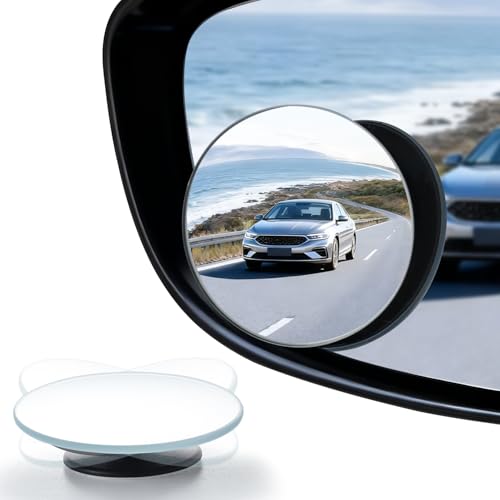
The LivTee Blind Spot Mirrors provide a physical enhancement to visibility through two 2-inch convex, HD glass mirrors. They are frameless, rust-resistant, and designed to expand the driver’s field of view, reducing blind spot risks during lane changes. The mirrors rotate and sway for adjustable, customized angles and snug mounting via small swiveling brackets. This option is ideal for drivers who prefer a low-tech, low-maintenance improvement to situational awareness without electronics or installation complexity.
Pyle Ultrasonic Blind Spot Detection System

The Pyle BSD System includes two ultrasonic sensors that monitor two blind regions with LED indicators and a buzzer. It emphasizes a 0-5 meter detection length and offers features like an integrated wire harness and installation accessories. As a practical option for those seeking a compact, two-sensor setup capable of notifying the driver when a vehicle enters the adjacent lane, the Pyle kit provides a balanced approach to lane-change safety with audible and visual alerts.
BY-J 24GHz Blind Spot Monitoring System

The BY-J system uses 24GHz millimeter-wave radar sensors with features aligned toward practical driving scenarios. It offers blind-spot detection, lane-change assist, and optional open-door warning functions. The system activates with turn signals and provides LED lighting plus a buzzer when a moving object occupies the rear blind spot, helping drivers avoid side collisions during lane changes. This option suits users seeking a versatile radar-based BSD with additional safety-oriented features.
Buying Guide
Key considerations when choosing a blind spot detection solution:
- Detection technology: Ultrasonic sensors offer reliable proximity detection at shorter ranges, while 24GHz millimeter-wave systems excel in longer-range detection and weather resilience. Consider your typical driving environment and weather conditions.
- Alert modalities: LED indicators, audible buzzers, and visual alerts help ensure quick recognition. Some systems use turn-signal-based alerts to reduce alert fatigue; others provide rapid flashing and multiple notification modes for variable driving scenarios.
- Range and coverage: Look at the detection distance and whether the system covers adjacent lanes, rear blind spots, or both. Range should align with your typical lane-change speeds and traffic density.
- Installation and compatibility: Aftermarket BSD systems vary in complexity. Some units require professional installation, while others offer plug-and-play integration with existing vehicle wiring. Mirrors and camera-based options may suit different vehicle configurations.
- Alerts while driving conditions vary: In low-visibility conditions (night, rain, snow), robust sensors and reliable alerts are crucial. Double-check whether the system maintains alert integrity in adverse weather.
- Maintenance and durability: Weather resistance, sensor protection, and ease of sensor cleaning are practical factors for longevity, especially for exposed sensors or external mirrors.
- Costs and value: Compare not just the upfront price but also installation complexity, warranty length, and the level of ongoing support. A higher upfront cost can translate into more durable hardware and better accuracy.
- Vehicle compatibility: Some systems focus on lane-change assistance, while others provide open-door or reverse-parking integration. Ensure the selected option aligns with your vehicle type and driving habits.
In choosing among the listed products, consider whether you prefer a sensor-based system with audible warnings, a mirror-based enhancement for immediate field-of-view expansion, or a hybrid approach that combines both. Each option has its own strengths: radar and ultrasonic systems tend to offer broader detection under varied weather, while mirrors deliver a straightforward, maintenance-light improvement to blind-spot visibility. Evaluate the required installation effort, your budget, and your safety priorities to select the best fit for your vehicle and driving style.