If your vehicle’s air conditioning isn’t cooling like it should, a refrigerant recharge kit or gauge set can help restore comfort without a trip to the shop. This guide highlights five reliable options for American drivers, focusing on compatibility, ease of use, and value. From standard R134a systems to newer R1234YF setups, these products cover common repair scenarios and DIY maintenance needs.
| Product | Brand |
|---|---|
| InterDynamics Car Air Conditiioner Gauge and Hose | A/C Pro |
| ZeroR AC Refrigerant R134a Replacement | ZeroR |
| ZeroR AC Recharge Kit R134a Replacement | ZeroR |
| Parts Universe Auto A/C Recharge Kit | Parts Universe |
| TNAIYH R134A Car AC Refrigerant Charge Hose Kit | TNAIYH |
InterDynamics Car AC Pro Gauge and Hose

The InterDynamics gauge and hose set is designed for straightforward refrigerant charging in cars and light trucks. It features an extra-large dial for accurate readings and a durable 24-inch charging hose to reach difficult ports. The kit is compatible with A/C Pro systems, offering a practical solution for DIY recharge tasks without specialized tools. This option emphasizes ease of use, reliable measurement, and compatibility with commonly used refrigerants on US roads.
Key benefits include: a user-friendly gauge, a long hose length for flexible connections, and a dispenser that simplifies directing refrigerant into the low-pressure side. While intended for consumer maintenance, users should follow safety guidelines and consult vehicle manuals to ensure correct charge amounts and compatible refrigerant types.
ZeroR Eco-Friendly R134a Replacement (3 Cans)

ZeroR offers an eco-friendly refrigerant solution for R134a systems. The product line emphasizes natural hydrocarbon formulations that aim to reduce environmental impact while delivering dependable cooling performance. Each 6-ounce can is designed for compatibility with standard R134a fittings, ensuring straightforward installation with typical can taps. The approach is to minimize environmental effects while keeping a familiar charge process for compatible vehicles.
Considerations include: hydrocarbon-based refrigerant chemistry, compatibility with R134a service ports, and the theoretical efficiency advantage of a smaller can holding an equivalent cooling effect. Users should verify system compatibility and be aware of local regulations regarding hydrocarbon refrigerants before use.
ZeroR 2-Pack R134a Replacement Recharge Kit

This two-pack kit from ZeroR is designed for R134a systems and includes 24-inch charging hoses to facilitate access to hard-to-reach ports. The kit emphasizes safe handling of refrigerant gases and provides a compact option for households with more than one vehicle or for backup usage. The product notes stress verifying system type and understanding that recharge alone may not fix leaks or other cooling problems.
Key points to evaluate: kit contents, compatibility with R134a, hose length, and the potential need for dye or leak testing when diagnosing cooling issues. Always consult the vehicle manual and follow local regulations when handling refrigerants.
Parts Universe Auto A/C Recharge Kit

The Parts Universe kit combines a recharge hose with a gauge to support DIY AC system recharging while addressing common leaks in hoses, O-rings, and gaskets. It provides a dual-action approach by aiming to restore cooling performance and seal minor leaks simultaneously. The included 16.8-ounce capacity is designed to recharge standard automotive AC systems, aligning with typical consumer maintenance tasks.
Key considerations include: gauge readability, hose flexibility, and the scope of the kit in relation to leak sealing versus pure recharging. For persistent leaks or failed components, additional repairs may be necessary beyond a recharge.
TNAIYH R134A Car AC Refrigerant Charge Hose Kit
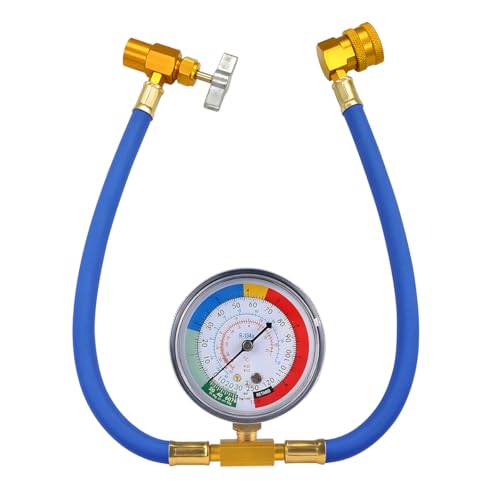
The TNAIYH hose kit provides a 15.4-inch charging hose with a 1/2-inch dispensing valve and aluminum construction for durability and better thermal performance. It is designed for R134a, R12, or R22 systems and aims to offer precise charging with a focus on compatibility across a range of vehicles. The kit emphasizes simple installation steps, including attaching the dispensing valve to the can and connecting to the low-pressure port for controlled charging.
Important factors include: material resilience, gauge visibility during charging, and whether the kit’s hoses reach the target service ports on particular vehicles. Users should confirm system compatibility before purchasing and follow safety protocols during operation.
InterDynamics Certified AC Pro R1234YF Gauge Set

This InterDynamics gauge and hose combination is designed for R1234YF refrigerant systems, common in newer vehicles. The kit features a reusable AC recharge gauge and a long 72-inch hose, enabling access to hard-to-reach ports on some models. The emphasis is on accuracy during charging and reliability over extended use, which matters for newer vehicles equipped with R1234YF engines and AC systems.
Key considerations include: compatibility with 1234YF protocols, gauge readability, hose length, and the need for leak testing or dye additions in some scenarios. As with others, users should consult vehicle documentation to ensure correct refrigerant type and charging procedure.
Buying Guide: How to Choose The Right Car AC Recharge Gear
Selecting the right recharge gear depends on your vehicle’s refrigerant type, access to service ports, and whether you need a simple top-off or a more advanced diagnostic approach. Here are essential purchase considerations and comparisons to help you decide.
- Refrigerant compatibility: Confirm your vehicle uses R134a or R1234YF. Some kits advertise universal use but perform best when matched to the system’s refrigerant type.
- Measurement accuracy: Look for gauges with clear, easy-to-read dials. A large gauge helps reduce charging errors, especially in tight engine bays.
- Hose length and flexibility: Longer hoses improve reach to low-pressure ports, but very long hoses can add complexity. Consider 24 to 72 inches as common ranges.
- Can taps and valves: Self-sealing taps reduce spillage but require correct threading and compatibility with your cans. Ensure the kit includes a reliable dispensing valve.
- Leak considerations: Some kits claim leak sealing alongside recharging. If there’s a persistent leak, the problem may be a worn component requiring replacement rather than a recharge alone.
- Safety and regulations: Refrigerants are pressurized and hazardous if mishandled. Follow all safety instructions, wear eye protection, and work in a ventilated area. Be aware of local environmental regulations regarding refrigerants and hydrocarbons.
- System diagnosis vs. recharge: A recharge kit is best for a known, simple low-charge scenario. If cooling performance remains poor after recharge, consult a professional to check for leaks, compressor issues, or sensor faults.
- Value and durability: If you own multiple vehicles or anticipate frequent DIY maintenance, a multi-pack or a kit with a robust gauge and durable hose may offer better long-term value.
In sum, the right car AC recharge gear balances refrigerant compatibility, measurement clarity, port reach, and safety. Use the guide to align product features with your vehicle’s needs, and consider keeping a back-up kit for ongoing maintenance without frequent trips to service centers.